10 Best Outdoor Canopy Tents for Wholesale Buyers?
Wholesale buyers are entering a more demanding outdoor events market. The American Rental Association’s 2024 forecast placed U.S. equipment rental revenue near $78.7 billion for 2025. This broad figure includes event-related equipment, not canopy tents alone. Still, it signals strong demand for rentable, reusable products.
The Outdoor Canopy Tent has become more than a simple shade solution. Buyers now assess frame strength, fabric performance, packed size, installation time, and replacement-part availability. Grand View Research reports continued growth in the global outdoor furniture market, supported by hospitality, commercial spaces, and outdoor living. Canopy suppliers benefit from these trends, but demand is uneven across regions and seasons.
Details matter. A powder-coated aluminum frame can reduce corrosion concerns. A dense polyester roof may improve shade and weather resistance. However, fabric weight alone does not prove quality. Buyers should request test documentation, seam details, warranty terms, and clear loading instructions. NFPA 701 may apply to flame-propagation testing for certain textiles and films, while local authorities may require additional fire, wind, or occupancy compliance.
No single ranking fits every wholesaler. A beach retailer may value compact bags and quick setup. An event rental company may prioritize replaceable parts and stronger anchoring systems. Some products look impressive online but feel unstable under repeated commercial use. That is easy to miss.
This guide evaluates ten Outdoor Canopy Tent options through a wholesale lens. It considers construction, usability, branding potential, shipping efficiency, and long-term value. The final choice still requires practical testing. Set one up. Check the joints. Measure the packed case. Then question the marketing claims.
Wholesale Canopy Categories: 10 Models by Size, Fabric, and Commercial Use
10 Best Outdoor Canopy Tents for Wholesale Buyers?
Wholesale canopy selection should begin with size, fabric, and use. The Outdoor Industry Association’s 2024 Participation Trends Report recorded 175.8 million U.S. outdoor participants. That broad activity supports steady demand for practical shelter, not decorative excess.
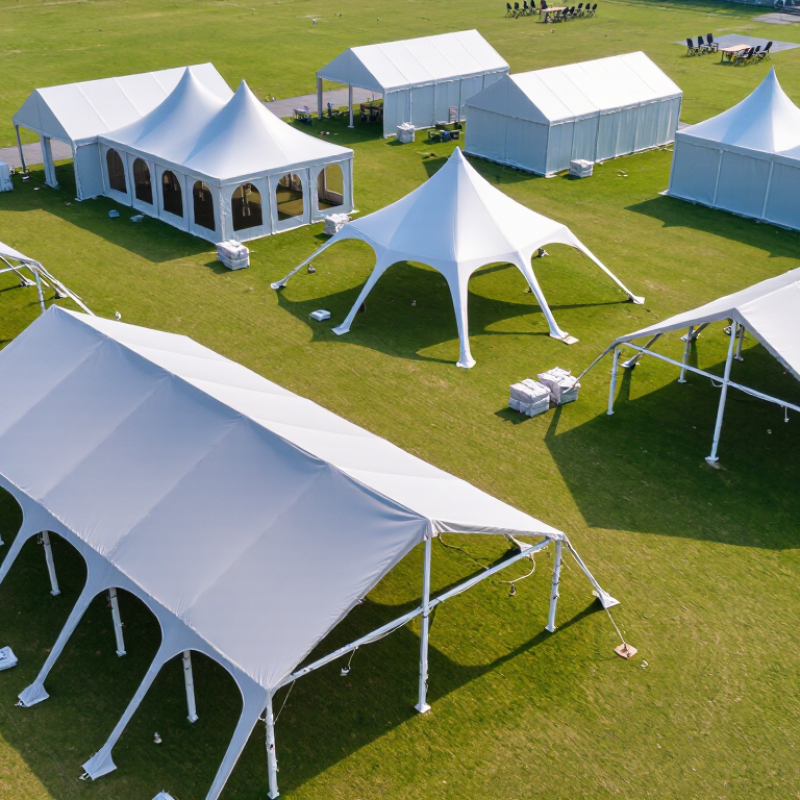
Here are ten wholesale categories: 1) 6x6-foot polyester sampling tent for compact displays; 2) 8x8-foot polyester market tent for small vendors; 3) 10x10-foot oxford canopy for standard booths; 4) 10x15-foot polyester tent for wider counters; 5) 10x20-foot oxford model for food-service queues; 6) 20x20-foot PVC-coated shelter for heavy commercial traffic; 7) 20x30-foot PVC tent for storage and staging; 8) flame-retardant fabric model for approved public venues; 9) waterproof ripstop canopy for mobile outdoor teams; 10) modular aluminum-frame tent for repeated installation.
Material changes the buying decision. The Industrial Fabrics Association International reports that coated fabrics remain important in demanding outdoor applications because they balance weather resistance and cleanability. Still, “waterproof” does not mean floodproof. Seams, drainage, and anchoring matter more than a glossy specification. I have seen buyers underestimate packed size, then lose warehouse space quickly. A useful wholesale review should test frame joints, zipper strength, fabric coating, replacement parts, and setup time.####
10 Best Outdoor Canopy Tents for Wholesale Buyers
Wholesale canopy categories compared by standard footprint, fabric construction, and typical commercial use.
Floor area is calculated from the listed standard canopy dimensions. Smaller 10-foot models are suited to markets and promotional booths, while larger 30- to 40-foot models provide coverage for events, dining areas, exhibitions, and temporary commercial operations. Fabric specifications represent commonly used canopy materials and are shown in the chart tooltips.
Safety Standards: ASTM F2447, CPAI-84 Fire Ratings, and EN 13782 Compliance
Wholesale buyers should treat safety documentation as a purchasing requirement, not a marketing extra.
ASTM F2447 addresses tent construction and performance, so request the exact edition, test scope, and product model covered. CPAI-84 evaluates fabric flammability. It does not make an entire canopy fireproof. EN 13782 covers temporary structures, including stability, anchoring, materials, and user safety.
Check every certificate carefully.
A practical review starts with the canopy’s fabric roll, frame joints, guy lines, and ballast instructions. The certificate should identify material composition, test dates, laboratory details, and batch traceability. Testing from an ISO/IEC 17025-accredited laboratory offers stronger evidence, although accreditation alone cannot correct poor product design.
Ask whether the tested roof fabric matches the production fabric. This mismatch is common enough to question.
Fire risk deserves attention in procurement planning. The NFPA report Fire Loss in the United States During 2023 recorded approximately 1,388,500 fires and 3,670 civilian fire deaths. That national figure is not canopy-specific, but it explains why flame documentation matters at crowded outdoor events. EN 13782 compliance should also be checked against local wind conditions and installation surfaces. A compliant frame can still fail when ballast is missing. Reviewers sometimes focus on certificates and overlook anchors, seams, drainage, or damaged poles. That is an avoidable weakness. Ask suppliers for inspection records, replacement-part availability, and clear setup instructions before placing a wholesale order.
Wholesale Scorecard: Wind Resistance, Setup Time, Weight, MOQ, and Warranty
10 Best Outdoor Canopy Tents for Wholesale Buyers?
Wholesale Scorecard: Wind Resistance, Setup Time, Weight, MOQ, and Warranty
A useful wholesale scorecard starts with wind resistance, not appearance. Check frame thickness, joint strength, and the canopy’s anchoring points. Ask for tested wind ratings and the test conditions behind them. A tent that survives a calm display area may fail beside an open beach. Setup time also matters. Two trained workers should raise a medium canopy smoothly, without forcing connectors or reading complex instructions.
Weight affects freight costs, warehouse handling, and event labor. However, lighter is not always better. Thin frames can reduce transport expenses but may feel unstable during sudden gusts. MOQ deserves equal attention. A low minimum order helps buyers test demand, while a high MOQ may improve unit pricing. Warranty terms reveal practical confidence. Read coverage periods, excluded damage, replacement procedures, and response times. Attractive wording can still hide narrow protection.
Tips:
Request one sample before placing a large order. Record setup time with a stopwatch. Inspect seams after repeated folding. Compare packed dimensions, not just product weight. I would also ask for spare-part availability, because small connector failures can stop an entire event. My own scorecard would leave space for judgment; weather, staff experience, and venue rules change the result. A perfect ranking is unlikely. That is worth admitting.
Supplier Evaluation: Bulk Pricing, Lead Times, Replacement Parts, and Custom Branding
10 Best Outdoor Canopy Tents for Wholesale Buyers?
For wholesale buyers, the best canopy tent is not always the cheapest. Request tiered pricing at 100, 500, and 1,000 units. Compare fabric, frame, packaging, freight, and duty separately. A low quote can still create expensive surprises.
The World Bank’s 2023 Logistics Performance Index gathered responses from 4,090 logistics professionals across 139 economies. Its framework highlights customs, tracking, and delivery timeliness. Ask suppliers for dated production milestones, not vague promises. Confirm whether quoted lead times include sampling, branding approval, and final inspection. Get everything in writing.
Replacement parts deserve equal attention. Ask for prices and availability for frames, connectors, roof covers, ropes, and carry bags. A missing connector can disable an entire tent during a weekend event.
Request a parts list with photographs and item codes. Keep a small spare inventory. It may seem wasteful, but emergency air freight costs more.
For custom branding, approve a physical sample or high-resolution proof before bulk production. Confirm color references, print durability, artwork ownership, and packaging labels.
The 2024 McKinsey Global Supply Chain Leader Survey identifies visibility and resilience as continuing priorities, yet supplier data is often incomplete. Buyers should test claims through a pilot order.
I have seen attractive samples hide weak stitching. That risk is easy to underestimate.