Why Choose a Pop Up Tent for Your Outdoor Adventures?
When planning outdoor adventures, a Pop Up Tent offers convenience and flexibility. These tents are designed for quick setup, making them ideal for spontaneous trips. Imagine arriving at your campsite and easily unfolding your tent within minutes. No complicated poles or lengthy instructions.
Pop Up Tents are lightweight and portable, making them perfect for hiking trips or weekend getaways. You can easily carry them in your backpack or trunk. However, it's crucial to assess the weather conditions. Some models may not hold up well in severe winds or heavy rain.
Choosing the right Pop Up Tent involves understanding your specific needs. It’s essential to consider space and durability. While some tents are spacious for families, others are better suited for solo adventurers. Reflecting on these factors can enhance your outdoor experience.
Understanding the Basics of Pop Up Tents
Pop-up tents offer a unique combination of convenience and functionality for outdoor enthusiasts. They are easy to set up, often popping open within seconds. This feature is especially valuable for campers who may not have experience with more complex tent structures. The intuitive design minimizes the time spent on assembly and maximizes the time for adventure.
When choosing a pop-up tent, consider factors such as size, weight, and weather resistance. A compact, lightweight model is ideal for hiking. However, larger versions may provide extra space for family outings. Always check the materials used for durability. Some tents may not withstand strong winds or heavy rain, which can lead to disappointing experiences.
Many users report difficulties with wind stability. Testing a pop-up tent in different conditions can help ensure its reliability. Once, I struggled to keep a tent upright during a sudden storm. This reminded me of the importance of securing my gear properly. Learning from these experiences enhances outdoor skills. Each adventure is an opportunity to reflect and improve.
Popularity of Tent Types for Outdoor Adventures
This bar chart illustrates the popularity of various tent types for outdoor adventures. Pop up tents lead in popularity due to their ease of setup, followed by dome tents and other types. Each tent type offers unique benefits catering to different camping needs.
Key Features and Benefits of Pop Up Tents
Pop-up tents are ideal for outdoor adventures. Their convenience stands out. They can be set up in minutes. This feature is especially useful for spontaneous trips. Imagine arriving at a campsite and needing shelter quickly. A pop-up tent solves this problem effortlessly.
One key benefit is their lightweight design. Easy to carry, these tents fit into almost any backpack. This makes them a great choice for hiking or picnics. They often come with UV protection as well. This is vital during sunny days. Being shielded from harmful rays can enhance your outdoor experience.
Tips: Always practice setting up your tent before your trip. This prevents surprises when you arrive. Additionally, check the weather forecast. Some pop-up tents may not withstand strong winds. Choose your spot wisely. Avoid low-lying areas that may collect rain. Consider these factors to ensure a hassle-free adventure.
Why Choose a Pop Up Tent for Your Outdoor Adventures? - Key Features and Benefits of Pop Up Tents
| Feature |
Description |
Benefits |
| Quick Setup |
Tents that pop up and can be ready in seconds |
Saves time and effort, making it ideal for spontaneous trips |
| Lightweight |
Designs made for easy transport |
Easier to carry for hiking and traveling |
| Compact Storage |
Folds into a compact size when not in use |
Saves space in your vehicle or at home |
| Durable Materials |
Manufactured with high-quality, weather-resistant fabrics |
Provides protection against rain, sun, and wind |
| Ventilation |
Features mesh windows and vents |
Enhances airflow and reduces condensation |
| Affordability |
Generally lower-priced than traditional tents |
Great value for casual outdoor enthusiasts |
Comparing Pop Up Tents to Traditional Camping Tents
When comparing pop up tents to traditional camping tents, several differences shine through.
Pop up tents are designed for quick assembly.
They can be set up in seconds, ideal for spontaneous camping trips or day outings. Traditional tents, however, often require
time and effort for setup and takedown. A survey by the Outdoor Industry Association indicates that
54% of campers prefer tents they can pitch in under five minutes.
Durability is another consideration. Traditional tents typically use sturdier materials, allowing them to
withstand harsher weather conditions. According to a report by the American Camping Association,
37% of campers experienced blown or damaged tents during storms.
While pop up tents are convenient, their lightweight design can make them less reliable in strong winds or heavy rain.
Storage and portability also matter. Pop up tents are compact when packed, ideal for
minimalist adventurers. Traditional tents often take up more space in a vehicle. However, a common criticism of
pop up tents is that they can be tricky to repack properly. This can lead to packing frustrations. In these moments,
many users reflect on their camping gear choices. Both tent types have their pros and cons, and the right choice
depends on individual needs and preferences.
Tips for Choosing the Right Pop Up Tent for Your Needs
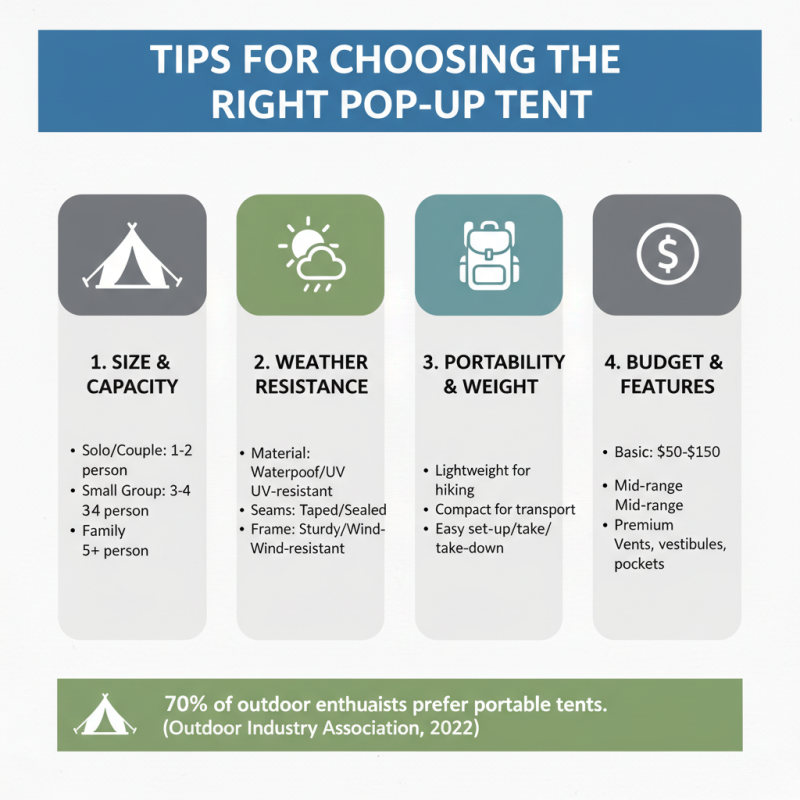
Choosing the right pop-up tent can enhance your outdoor experiences. Several key factors should be considered to maximize your adventures. A 2022 survey by the Outdoor Industry Association reported that nearly 70% of outdoor enthusiasts prefer portable options for their camping needs. This indicates a growing trend toward lightweight and user-friendly gear.
When selecting a tent, think about size and capacity. A 2-person tent may be snug for gear. Conversely, a larger tent could be heavy to carry. Consider your group size and the amount of equipment you’ll have. Look for a balance between comfort and portability; a tent that’s easy to set up can save time, especially after a long hike.
Weather resistance is also crucial. Strong winds and rain can turn a fun trip into a nightmare. Many tents offer varying degrees of waterproofing. Check the tent's rainfly and materials for durability. Remember, investing in quality gear ensures reliability during unexpected conditions. If the tent is not sturdy, you might feel insecure in nature. Take these tips to find a tent that meets your specific needs.
Setting Up and Taking Down Your Pop Up Tent Efficiently
Setting up a pop-up tent can be straightforward, but it helps to know some tips. First, allocate a clear space. Remove any sharp objects or debris that might damage the tent. Unfolding the tent can be done by holding the center and allowing it to spring open. However, sometimes, it may get stuck. Look around you; there could be tangles in the fabric. Take a moment to observe and gently free any snags.
Taking down your pop-up tent requires patience. Start by taking out the stakes or pegs. Folding the tent might seem easy, but misalignment can lead to frustration. Many people struggle at this stage. To fold it properly, push together the center poles while pulling the sides down. Ensure that no part of the fabric is caught. It might feel uneven or awkward at first, but practice makes perfect. Keep in mind the importance of proper storage for longevity and quick setups in the future.