How to Choose the Best Hiking Day Pack for Your Adventures?
Choosing the right Hiking Day Pack is crucial for outdoor enthusiasts. A well-fitted day pack enhances comfort and efficiency during hikes. According to the Outdoor Industry Association, 47% of Americans engage in hiking. Many struggle with selecting the appropriate gear.
Research indicates that a proper day pack can reduce fatigue by up to 30%. This is significant for both casual walkers and experienced hikers. Comfort should align with the pack’s design. Many packs offer various features such as hydration reservoirs, organizational compartments, and lightweight materials. However, not all hikers prioritize these elements, which can lead to discomfort.
The market is flooded with options, but choosing wisely is essential. A poorly chosen Hiking Day Pack can lead to back pain or hinder your adventure. Reflecting on personal needs and trip specifics is necessary. Balance capacity, weight, and durability when making a decision. In doing so, hikers can truly enhance their outdoor experience.
Understanding Your Hiking Needs and Preferences
Choosing a hiking day pack starts with understanding your specific needs. The ideal pack balances comfort, weight, and capacity. A recent industry report indicates that approximately 70% of hikers prioritize weight when selecting a pack. A lighter pack can enhance your overall hiking experience. However, don’t sacrifice capacity. You may need enough room for food, water, and gear.
Consider your hiking style. Short trails may require a small, minimal pack. For full-day hikes, a pack accommodating 20-30 liters is often suitable. Research indicates that a well-fitted pack can reduce fatigue by 30%. Thus, paying attention to fit is crucial. Adjustable straps and padded back panels can greatly improve comfort.
Personal preferences matter too. Some hikers prefer external pockets for easy access to snacks. Others might want a hydration reservoir. Reflect on your typical hiking conditions. Will you encounter rugged terrain? A pack with additional support could be beneficial. Remember, there is no single “best” pack. Your ideal choice should reflect your unique hiking patterns and the challenges you face on the trail.
Comparison of Popular Day Pack Capacities for Hiking
Key Features to Look for in a Day Pack
Choosing the right hiking day pack can significantly enhance your outdoor experience. It’s essential to consider several key features. A good fit is crucial; packs should sit comfortably on your back. Adjustability is important to accommodate layers of clothing. This could mean the difference between an enjoyable hike and a backache. According to industry standards, a proper fit reduces strain, leading to fewer injuries.
Capacity matters too. A day pack should be spacious enough for essentials yet not overly bulky. Most experts recommend a capacity between 20 to 30 liters for day hikes. This size typically allows enough room for water, snacks, and a first aid kit without causing imbalance. Waterproof materials also add value, as they protect your gear from unexpected weather changes.
Ventilation systems enhance comfort during warm weather hikes. Packs with mesh back panels improve airflow. This feature can help maintain temperature, reducing sweat buildup on your back. Research indicates that well-ventilated packs lead to higher satisfaction rates among hikers. Remember that weight distribution is vital; uneven weight can lead to exhaustion. A day pack designed with optimal weight distribution keeps you energized longer. Consider these features carefully; they can make all the difference on the trail.
Choosing the Right Size and Fit for Comfort
Choosing the right size and fit for your day pack is crucial. A well-fitted pack prevents discomfort during your hike. Look for a pack that rests comfortably on your hips. The right size should allow for good weight distribution. You want to avoid pressure points on your shoulders and back.
When trying on a pack, pay attention to the torso length. Everyone's body is different. Some packs may feel fine but could dig into your shoulders. Adjust the straps while wearing it to find your sweet spot. Aim for a snug fit without being restrictive.
Tips: Take time to test the pack with weight. Walk around and mimic hike movements. This helps assess comfort levels. Consider how it feels with your usual gear. If it feels off, don’t hesitate to keep looking. Remember, hiking should be enjoyable, not painful. Your pack is a key part of that experience.
Material and Durability Considerations for Hiking Packs
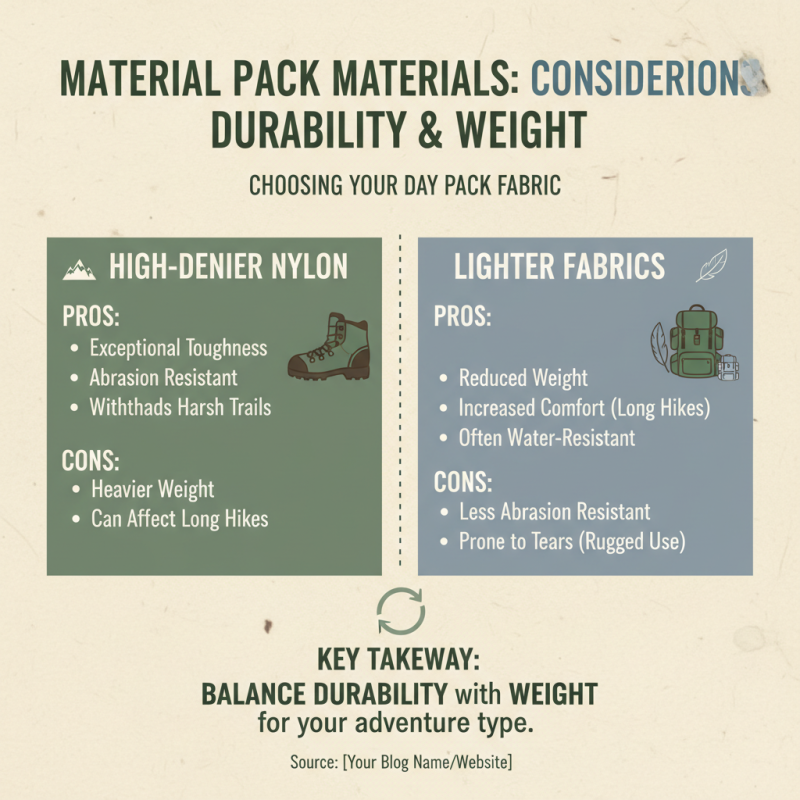
Choosing the right material for your hiking day pack is crucial. Look for durable fabrics that withstand the rigors of outdoor adventures. High-denier nylon is a popular choice for its toughness. It resists wear and tear, making it suitable for rugged trails. However, it can be heavier than lighter options, which could affect your long hikes.
Consider waterproof materials, especially if you hike in wet climates. Waterproof packs keep your gear dry but may trap moisture inside. Breathable fabrics can solve this issue, allowing sweat to escape while keeping rain out. Remember to check for reinforced seams. They enhance durability but can add weight.
Weight matters when you're on the move. Lightweight packs are easier to carry, yet they might sacrifice some durability. Reflect on your hiking style. If you often trek through rough terrain, place durability at a premium. On the other hand, if you prefer leisurely trails, focus on comfort and lighter materials. Balancing these factors ensures that you choose a pack suited to your needs.
Budgeting for the Best Day Pack Without Compromising Quality
Budgeting for a high-quality hiking day pack can be a balancing act. Research indicates that consumers often spend between $50 and $300 on these essential items. Interestingly, around 60% of outdoor enthusiasts choose packs based solely on price, overlooking critical features like durability and comfort. It’s essential to consider the materials used in popular packs. High-denier fabrics offer better abrasion resistance but often come at a premium price.
Another factor to consider is weight. Lightweight options can save your energy during long hikes. However, many of these packs might compromise on support. A study from the Outdoor Industry Association underscores that 70% of hikers prioritize comfort over price when making purchases. This highlights the need for intentional choices. Invest in a pack that provides adequate support without breaking the bank, and don’t shy away from trying various models to find what fits best.
Millennials are particularly budget-conscious, with 65% seeking value without sacrificing quality. This is a smart approach, as finding the right pack can significantly enhance your outdoor experience. Take the time to research reviews and seek advice from experienced hikers. Their insights can guide you towards making a more informed decision, ensuring you don’t end up regretting a hasty purchase.
How to Choose the Best Hiking Day Pack for Your Adventures? - Budgeting for the Best Day Pack Without Compromising Quality
| Feature |
Importance |
Price Range (USD) |
Recommended Capacity (Liters) |
| Weight |
High |
$50 - $150 |
15 - 25 |
| Comfort |
High |
$70 - $200 |
20 - 30 |
| Water Resistance |
Medium |
$60 - $180 |
10 - 20 |
| Durability |
High |
$80 - $250 |
15 - 35 |
| Storage Options |
Medium |
$40 - $120 |
15 - 30 |