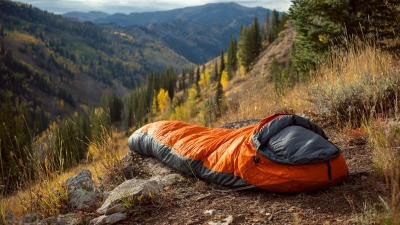
Why choose a Hiking Sleeping Bag when an ordinary sleeping bag seems sufficient? The answer begins with movement. Hikers carry every gram across uneven ground, wet grass, and exposed ridgelines. A purpose-built Hiking Sleeping Bag balances insulation, packability, moisture control, and sleeping comfort. It should protect the body without becoming an exhausting load.
The 2024 Outdoor Participation Trends Report from the Outdoor Foundation recorded 175.8 million American participants in outdoor recreation during 2023. More people are entering trails, yet many underestimate nighttime exposure. A temperature rating is not a promise of personal comfort. Wind, humidity, fatigue, clothing, and sleeping-pad insulation all change the experience. Cold hips on a thin pad can ruin an otherwise careful equipment choice. That detail is easy to miss.
Backpacking educator Andrew Skurka captures the principle simply: “Sleep is the foundation of a good day on the trail.” His observation reflects field experience, not advertising language. Grand View Research also identifies continued growth in the global sleeping-bag market, driven partly by camping and adventure travel. Market growth does not prove that every premium bag performs better. It only signals rising demand.
A Hiking Sleeping Bag gives hikers a more deliberate system. Lightweight down can compress dramatically, while synthetic insulation often handles damp conditions better. Neither option is perfect. Down may lose warmth when wet, and synthetic fill usually occupies more space. The best choice depends on climate, trip length, body warmth, and packing habits. A bag that feels impressive in a store may feel restrictive beside a cold mountain lake. Careful comparison matters more than a fashionable label.
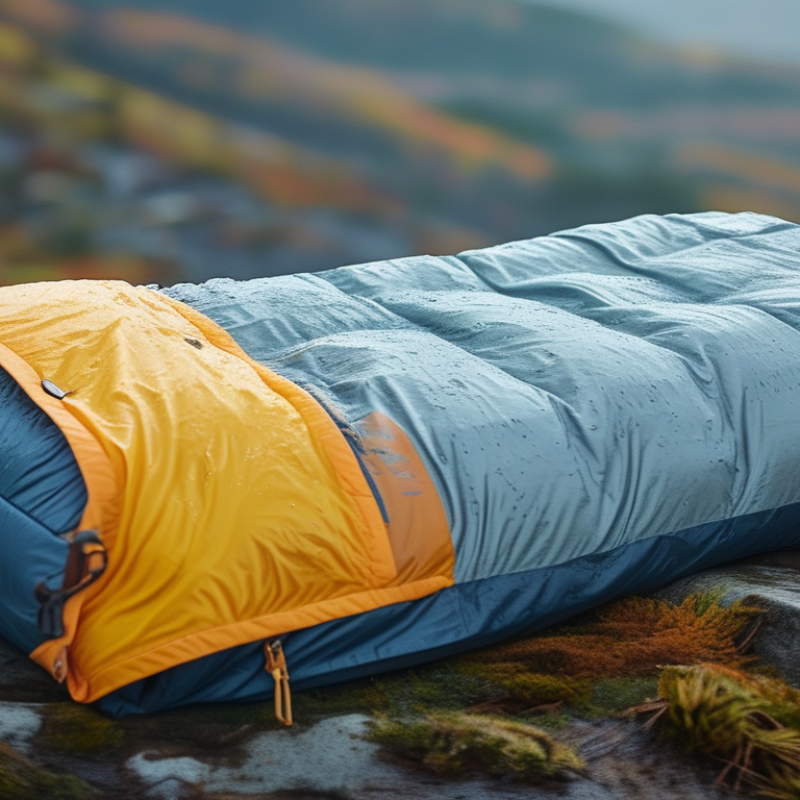
A hiking sleeping bag is designed for movement, changing weather, and limited pack space. Its value becomes clearer under ISO 23537 temperature ratings. This standard evaluates thermal performance in controlled laboratory conditions, using a heated mannequin and defined sleeping clothing. The result is not a simple “warm” or “cold” label. It usually includes comfort, lower limit, and extreme ratings for different users and risks.
The comfort rating suggests the lowest temperature at which a standard woman may sleep comfortably. The lower limit refers to a standard man sleeping curled up without excessive cold. The extreme rating indicates survival potential, not safe comfort. It should never guide ordinary trip planning. ISO testing improves comparison, but real nights remain less predictable. Wind, humidity, fatigue, body size, and an unsuitable sleeping pad can change everything. A warm bag may still feel cold on frozen ground.
Tips:
Check the comfort rating before the extreme number. Match the bag with an insulated sleeping pad and suitable clothing. Keep the bag dry, especially near tent doors. A draft collar and close-fitting hood can reduce heat loss. Do not compress the bag for long storage. I used to trust temperature labels too literally. That was a mistake. Personal comfort varies, and careful judgment still matters.
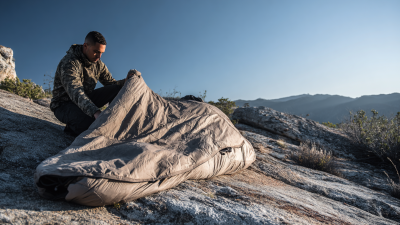
Why Choose a Hiking Sleeping Bag?
A hiking sleeping bag balances warmth, weight, and packability on every trail. Fill power measures loft, not complete warmth. One ounce of 900-fill insulation expands to about 900 cubic inches. The same ounce of 600-fill expands to roughly 600 cubic inches. That is 50% more loft from the higher grade. It can provide similar warmth with less insulation, reducing pack weight and compression size. However, total fill matters more than the label alone.
Real warmth depends on insulation quantity, bag shape, baffles, moisture, and drafts. ISO 23537-1 uses controlled laboratory testing to assess sleeping-bag thermal performance. Its temperature ratings are useful comparisons, not personal guarantees. ASTM F3340/F3340M also emphasizes measured thermal performance under controlled conditions. I once trusted fill power alone and felt cold in damp mountain air. That assumption was wrong. A wet 900-fill bag may perform worse than a well-protected 600-fill model.
Tips: Compare total fill weight, not only fill power. Check the ISO comfort rating. Store the bag loose at home. Compress it only during travel. Test your sleep system before a remote hike. Small details matter.
A hiking sleeping bag earns its place through controlled warmth, low weight, and reliable packability. For many three-season routes, a 0–5°C comfort rating suits cool spring nights, summer uplands, and early autumn camps. The useful detail is “comfort,” not “extreme.” ISO 23537-1 bases comfort ratings on a standardized sleeper, while the lower limit reflects a standard man. This distinction matters when a tired hiker sleeps poorly or wears damp layers.
NOAA’s U.S. Climate Normals for 1991–2020 use 30 years of observations. They help hikers compare typical overnight temperatures. Yet mountain weather ignores averages. Elevation, wind, wet ground, and exposed camps can make 5°C feel colder. A practical choice leaves a small margin. I prefer a bag near 0°C when forecasts hover around 5°C, especially above tree line. A liner can help, but it cannot replace insulation.
The Outdoor Industry Association’s 2024 Outdoor Participation Trends Report recorded 175.8 million U.S. outdoor participants. More people are sleeping outside across changing conditions. That growth makes honest temperature interpretation important. A 0–5°C bag is versatile, not magical. Check the test standard, sleeping pad R-value, and personal sleep habits before buying. I sleep cold sometimes. That weakens any neat rule.
A hiking sleeping bag weighing 700–1,500 grams can protect rest without dominating your pack. On a three-day route, that difference becomes noticeable by the second morning. Less weight leaves room for water, food, or warmer clothing. It also reduces strain on steep climbs and uneven ground. That matters.
The best choice depends on more than scale weight. Check the comfort-temperature rating, insulation type, packed size, and bag shape. A lighter bag may use less insulation, so it might feel cold during damp nights.
I once chose a compact bag for a high valley and underestimated the wind. Sleep was poor. The lesson was simple: low weight cannot replace suitable warmth.
Experienced hikers usually match the bag to the route, season, and personal sleep habits. A 700–1,000 gram model may suit mild conditions and efficient sleepers.
A 1,100–1,500 gram model can offer more insulation for cooler camps. Dry storage is essential, especially when rain is possible.
After each trip, inspect the shell, zipper, and insulation before trusting it again. A few extra grams may be worthwhile when they improve warmth, recovery, and decision-making on the trail.
Why Choose a Hiking Sleeping Bag?
A hiking sleeping bag earns its place when every gram and degree matters. In the field, comfort depends on more than temperature ratings. A tightly woven nylon or polyester shell can resist abrasion from rocks and reduce wind penetration. Ripstop construction adds useful durability, though heavier fabric may increase pack weight. Water-resistant coatings help against dew, but excessive coating can reduce breathability. I once trusted a thin shell near a damp tent wall. That mistake made the insulation feel colder.
Down insulation provides excellent warmth for its weight and compresses efficiently. However, it loses performance when wet and needs careful storage. Synthetic insulation usually performs better in humid weather. It dries faster and remains warmer after limited moisture exposure. The tradeoff is clear: synthetic fill often feels bulkier. Mummy shapes conserve heat around the shoulders and feet. Rectangular designs offer more room but can leave cold gaps. A semi-rectangular shape may suit restless sleepers, although personal comfort is difficult to predict.
Tips: Match the bag’s shape to your sleeping position. Check shoulder and hip measurements, not only the temperature rating. Use a liner when washing access is limited. Store the bag loosely at home. Small details matter. Overlooked fit can ruin good insulation. Temperature ratings also vary by testing methods, so treat them as guidance, not a promise.
Which shell fabrics, insulation types, and shapes improve field performance?
The chart uses indicative 0–100 performance scores for common sleeping-bag design combinations. Lightweight down generally offers the best warmth-to-weight ratio and packability, while synthetic insulation provides more reliable performance in damp conditions. Mummy shapes retain heat efficiently, whereas semi-rectangular shapes offer more room but usually reduce thermal efficiency.