Leave Your Message
A Pop Up Tent can open in seconds, but choosing the right model takes more than checking its folded size. For global buyers, the details behind the product often matter just as much as its appearance. A frame that feels sturdy in a showroom may behave differently on uneven grass or in gusty weather. Fabric weight, seam construction, ventilation, and packed dimensions all deserve a closer look.
Small details matter. Ask for clear specifications, current product photos, and sample measurements before comparing quotes. Check how the tent folds, how much space it needs in storage, and whether replacement parts are available. These questions can reveal practical differences between products that look nearly identical online. A low price can seem convincing until freight, packaging, or quality checks change the calculation. It is easy to miss that.
This guide shares ten buying tips to help you assess suppliers and compare tents with a consistent checklist. It covers intended use, materials, frame design, setup, weather guidance, packaging, customization, communication, samples, and after-sales support. Not every buyer needs the same features. A market stall may value quick setup and a printed canopy, while a family may care more about shade and carrying comfort. Be careful with broad claims, especially when test details are missing. Even a careful checklist cannot remove every surprise, and specifications alone cannot show how a tent feels in use. Treat the selection process as a series of checks, not a shortcut to certainty.
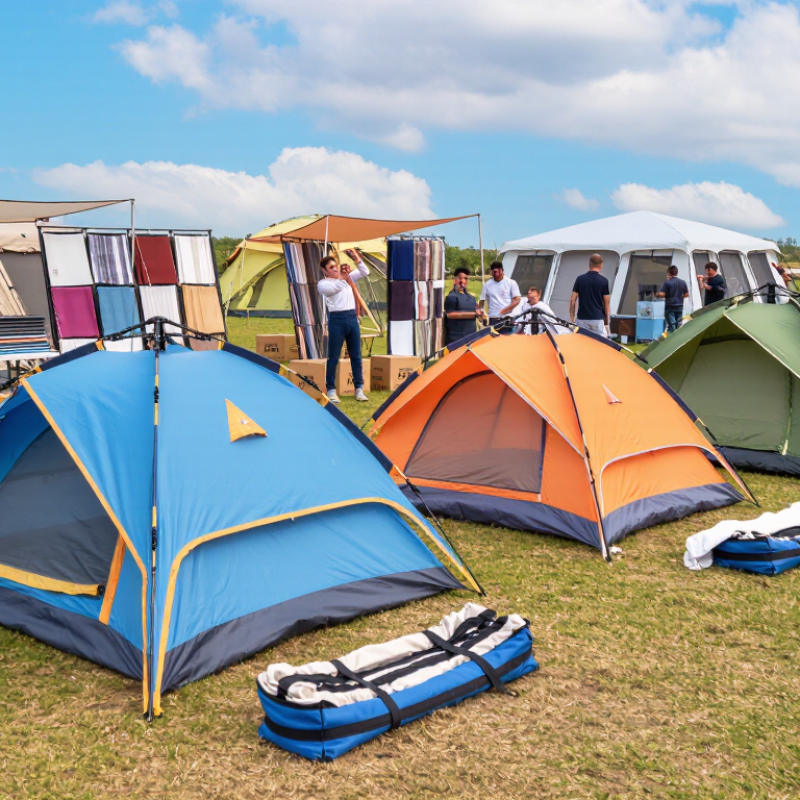
10 Pop Up Tent Buying Tips for Global Buyers
Define Your Use Case, Capacity, and Destination
A pop-up tent should match the work it must perform, not just its folded size. For weekend camping, a two-person shelter may need room for sleeping bags, shoes, and a small lamp. For trade events, prioritize standing height, open access, and clear branding panels. A beach shelter needs strong anchoring and corrosion-resistant hardware. Different uses create different demands.
Capacity claims can be misleading. Check the interior floor dimensions and usable headroom before ordering. Two adults may fit on paper, but their bags can make the space uncomfortable. I once selected a tent by sleeping capacity alone and regretted it during a wet night. Measure the people and equipment together. Leave breathing room.
Your destination matters just as much. Hot, humid regions require mesh panels, cross-ventilation, and fabrics with reliable UV resistance. Cold or rainy locations need sealed seams, a sturdy rain cover, and enough clearance from wet ground. Mountain sites may require stronger poles and deeper anchors. Coastal air can damage ordinary metal parts over time. Ask for fabric weight, frame material, wind guidance, packed dimensions, and setup instructions. Request test evidence when available, but do not treat a laboratory rating as a promise for every campsite. Local weather changes quickly.
| Tip | Buying Dimension | Practical Guidance | Why It Matters |
|---|---|---|---|
| 1 | Define the primary use case | Decide whether the tent is for camping, a beach shelter, a market stall, an event, or emergency use. Compare models designed for that purpose rather than treating all pop-up tents as interchangeable. | Design priorities differ: a camping tent needs a sleeping area and weather protection, while an event shelter may need open sides and more usable standing space. |
| 2 | Choose capacity based on real use | Check the stated sleeping capacity, floor dimensions, and usable layout. Allow extra room if occupants will store bags inside or prefer more space; advertised capacity may assume close sleeping arrangements. | The number of people a tent can nominally sleep does not necessarily indicate how comfortably it accommodates people and their gear. |
| 3 | Match the tent to the destination | Consider local temperature, rainfall, humidity, wind exposure, sun intensity, terrain, and season. Check product specifications for the intended conditions and follow the manufacturer’s stated limits. | A shelter suited to mild, sheltered conditions may not be appropriate for exposed sites or severe weather. |
| 4 | Check weather protection | Review whether the design includes a rainfly, sealed or taped seams, a bathtub-style floor, and stated water-resistance information. For sunny destinations, look for clearly stated UV-protection information rather than assuming fabric provides it. | Construction details and published test information help buyers compare protection more meaningfully than appearance alone. |
| 5 | Evaluate ventilation | Look for mesh panels, adjustable vents, and openings that can promote airflow while helping keep insects out. Consider how the openings can be managed during rain. | Air circulation can reduce condensation and improve comfort, especially in warm or humid environments. |
| 6 | Compare setup and pack-down | Ask for a demonstration or clear instructions, and check the packed dimensions and weight. Confirm the tent can be folded to a size that fits the intended vehicle, storage space, or luggage allowance. | “Pop-up” describes a quick-opening design, but folding methods, packed size, and handling can vary between models. |
| 7 | Inspect frame and fabric details | Review frame material, joint construction, fabric type, floor material, zippers, and reinforcement at stress points. Request specifications for the exact model and production version. | These components affect durability, weight, maintenance, and suitability for repeated use. |
| 8 | Plan for anchoring and site conditions | Check which stakes, guy lines, or weights are included and whether they suit the expected ground. Follow setup instructions and do not use a tent in conditions beyond its stated limits. | Anchoring needs vary with soil, surfaces, and exposure; the included accessories may not suit every destination. |
| 9 | Verify safety and documentation | Request care instructions, fire-safety information where applicable, material details, and test documents relevant to the destination market and intended use. Confirm that claims can be supported for the specific product. | Requirements and accepted documentation can differ by country, product category, and sales channel. |
| 10 | Check landed cost and after-sales support | Compare unit cost alongside packed shipping volume, import duties, taxes, delivery terms, spare-part availability, warranty coverage, and repair options. Confirm packaging dimensions before requesting a freight estimate. | For international orders, freight and support arrangements can materially affect total cost and long-term usability. |